
Arrest Warrants in Coffee County
In Tennessee, an arrest warrant usually begins with a sworn complaint or affidavit. A neutral magistrate, or an authorized clerk, reviews it for probable cause under Rule 4. If it passes, the warrant names the county and the offense, describes the person, and directs an officer to make an arrest and bring that person before a magistrate. A summons can be issued instead. In Coffee County, the Judicial Commissioner coordinates this criminal process for county, city, and state law-enforcement agencies alike. Which office actually issues a given warrant turns on the charge and the procedure behind it. Felony paperwork does not always come from Circuit Court, so it pays to ask rather than assume.
Coffee County Arrest Warrant Review
The complaint is where the request starts. An officer or authorized applicant swears out facts about an alleged offense and the person tied to it. A neutral judicial official then weighs those facts before signing off on a warrant or summons. Rule 4 governs this process, and Tennessee law spells out the information a warrant should carry. One caution: an underlying affidavit can be sealed or protected even when a docket exists. The Tennessee Rules of Criminal Procedure set out Rule 4 in full. Coffee County's process office handles the local routing, but the court itself controls the case and the next appearance.
The rules index frames the procedure without showing a private complaint or case result.
What a Coffee County Arrest Warrant Contains
Coffee County dockets follow fields a reader can ask about, and the blank Tennessee capias and bench forms show what a warrant may list. Neither publishes a local warrant-number format. Keep personal details to yourself. Before trusting a name match, ask the clerk to pin down the exact case and court.
| Court and county | Names the authority and jurisdiction tied to the paper. |
|---|---|
| Case number | Use the number assigned by the court; Coffee does not publish a warrant prefix. |
| Charge and code | May show offense, count, TCA code, and agency. |
| Issue and return | Shows when process was issued and what the officer reports. |
| Bond and appearance | Case-specific bond terms and an initial appearance date, if set. |
Coffee County Arrest Warrant Process
Coffee County names the Judicial Commissioner as the office that coordinates arrest warrants, criminal summonses, and related process for local law enforcement. It serves county, city, and state agencies, and it takes public questions on weekdays. Think of it as a routing channel rather than a database, and no substitute for the issuing clerk's instructions. The office sits at 76 County Jail Lane and lists 931-570-4428. The official Judicial Commissioner page states its role.
How Coffee County Arrest Warrants Are Served
A warrant is directed to an authorized officer or agency for service. The Coffee County Sheriff's Office runs the county jail and its warrant staff. Manchester and Tullahoma police handle city policing and city process. Tennessee officers may also serve process assigned to them. So which agency holds a particular record depends on the warrant's routing, not simply on where a person lives. The blank form includes an officer-return section with executed and not-found paths. A return describes service only. It says nothing about how the charge or case ended. After an arrest, the court takes up initial appearance, bond, counsel, and the next setting.
Which Agency Serves Coffee County Arrest Warrants
For a county matter, the sheriff's office at 931-728-3591 is the first public contact. The Judicial Commissioner can explain how process gets routed. A city-court citation goes first to the city court that issued it. General Sessions and Circuit records run through the Circuit Court Clerk at 931-723-5110.
| Channel | Local role | What to confirm |
|---|---|---|
| Sheriff | County warrant staff and jail | Current service index and next office |
| Judicial Commissioner | Criminal process coordination | Issuance or routing question |
| City police | Municipal policing and city process | City court or citation channel |
| Circuit Court Clerk | Circuit, Sessions, Juvenile records | Issuing court, case, and court step |
Arrest Warrant vs Summons vs Bench Warrant
An arrest warrant follows probable-cause review. A summons tells a person to appear, with no immediate arrest under its terms. A bench warrant answers a court event, like a missed setting or a failure to comply. A Rule 9 capias can follow indictment or presentment. Tennessee's blank form merges the capias and bench-warrant labels, so ask the clerk which event produced the paperwork in question.
| Process | Starting event | Next contact |
|---|---|---|
| Arrest warrant | Complaint and probable-cause review | Issuing court and serving agency |
| Summons | Complaint with an order to appear | Court named in the process |
| Bench warrant | Missed date or noncompliance | Court that set the hearing |
Coffee County Arrest Warrant Fields
Coffee County dockets can show court and division, case number, judge, count, TCA code, offense, agency, violation date, hearing type, and bond type or amount. The blank state form adds the issuing date, signature, initial appearance, identifying description, and the officer's return. Those are questions for the clerk, not details to republish from anyone's file. No public county database offers a standard arrest-warrant result page. Confirm any name match with date of birth and case number through the official office. That matters most when names are common.
Coffee County Arrest Warrant vs Rule 9 Capias
Rule 9 authorizes a capias or summons upon indictment or presentment. That route differs from a Rule 4 arrest warrant on a complaint, even though both can direct a person to court and the official blank form shares one label. The issuing document and the case event control. So ask whether the process followed an indictment, a missed date, a probation matter, or a complaint. Coffee County Circuit Court handles criminal trials and has two divisions. General Sessions handles preliminary felony work and qualifying misdemeanors. The Circuit Court Clerk can route a case number to the division that owns it. The Circuit Court page describes the local criminal court structure.
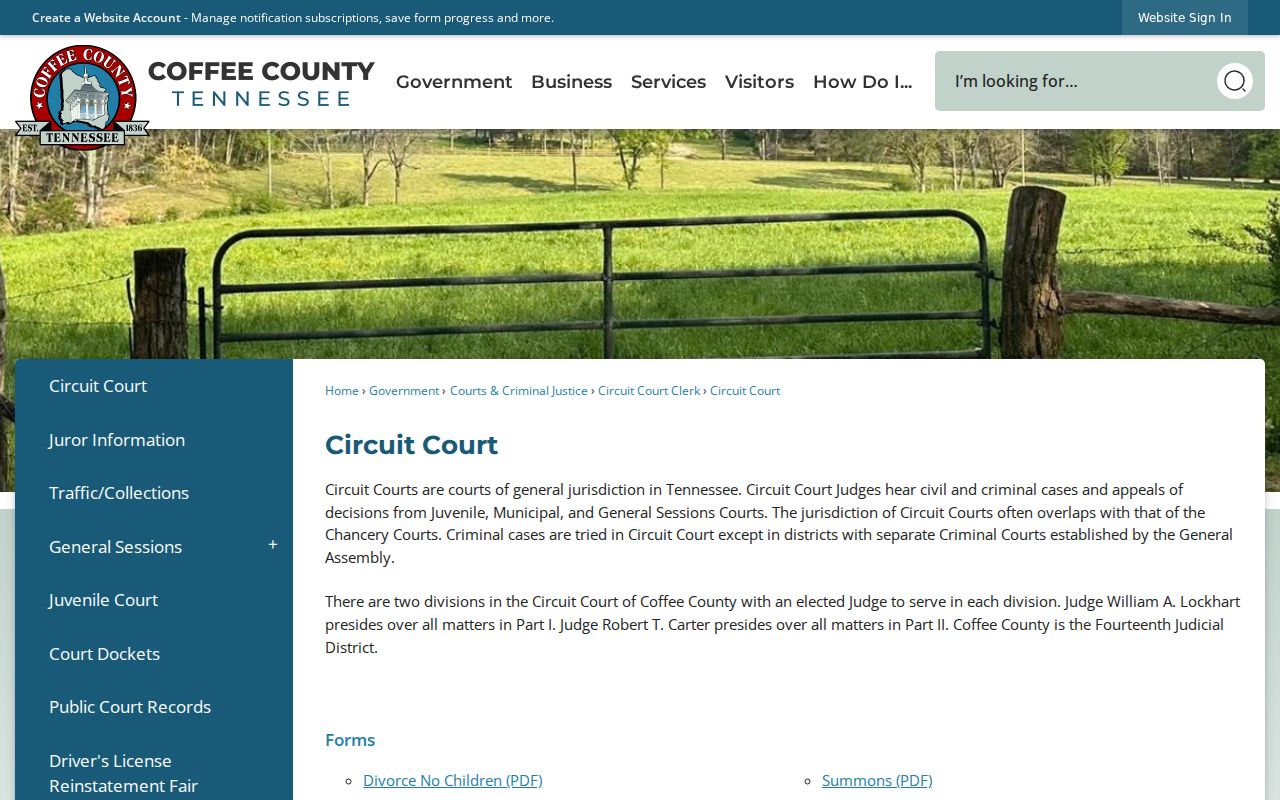
The county's court page links to local rules and court resources, not a current warrant roster.
What to Do If There's a Warrant for You
Pick up the phone before you drive anywhere. In Coffee County, call the sheriff and the issuing court and ask the questions that matter: can a lawyer schedule your appearance, is a motion on the table, and where does surrender actually happen? Get the bond terms in plain terms too, plus the ID and paperwork you should bring. The county posts no universal walk-in schedule, no bond window, no accepted payment list, and no same-day release promise, so what the clerk tells you is what governs your trip.
Confirm first: an active warrant can lead to arrest during lawful contact. Ask the sheriff and issuing court for safe, exact instructions.
Keep every paper from the day, whatever happens. Whether you were served, posted bond, or got a court order, hold on to the documents and write down the next court date. Then confirm your status with the issuing clerk, and ask the sheriff when its warrant index updates. One more thing: being served does not close the underlying case in Coffee County.
Before a Coffee County Arrest Warrant Appearance
Several practical details never get answered in Coffee County's public materials. Jail intake hours for warrant surrender, the public entrance, ID and property rules, which bond payments are accepted, and how soon a magistrate sees you all stay unlisted, so ask the office before you travel. For a Circuit or General Sessions case, confirm whether the courthouse or the jail is the required destination. If a city citation started this, call the municipal clerk instead, because a county sheriff address is no promise that the city matter can be changed or that you walk out after arriving.